


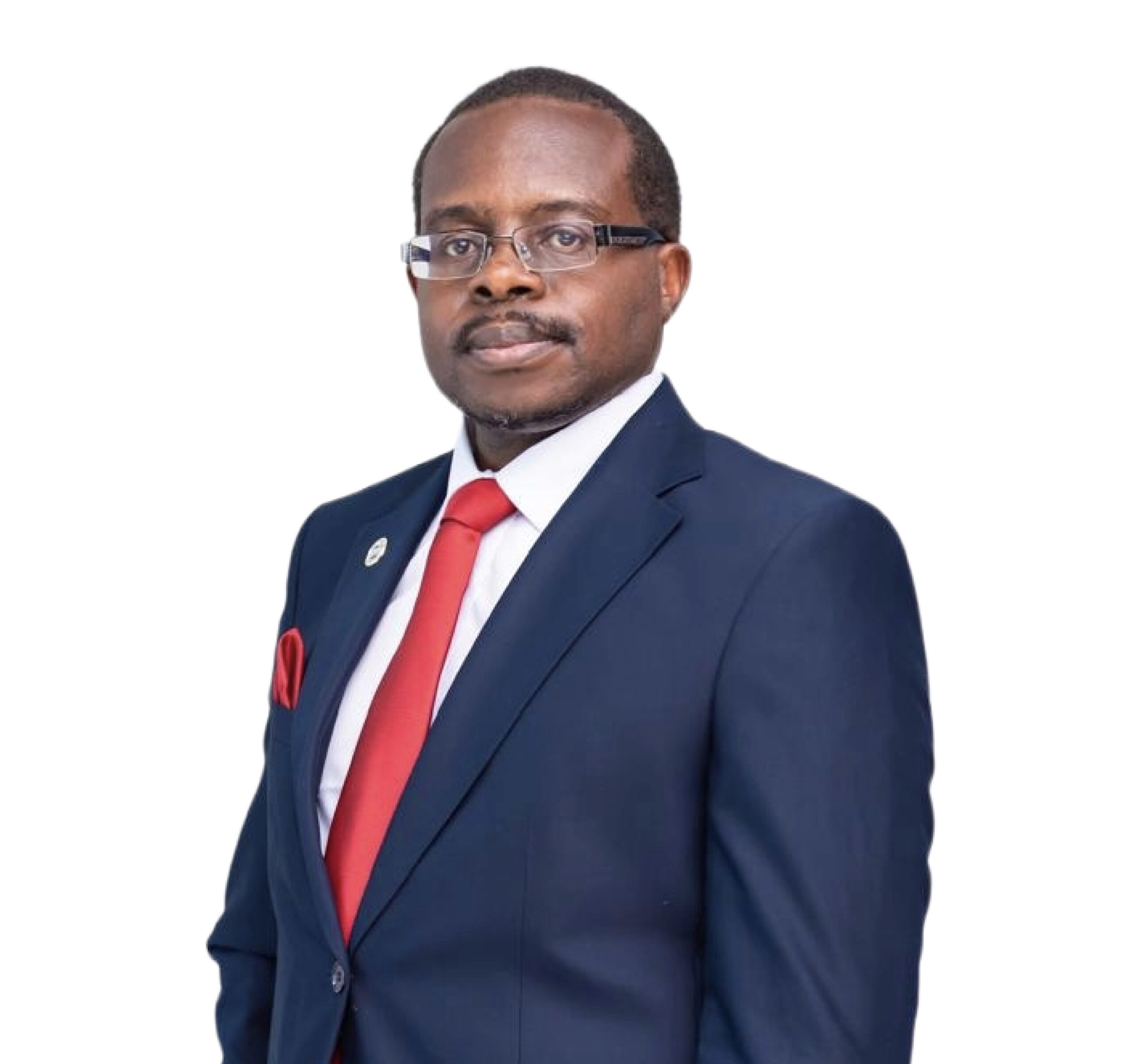
The election of Charles Kanjama SC as President of the Law Society of Kenya (LSK), with 44% of the vote in a tightly contested race where his two challengers shared the remaining 56%, is more than a routine leadership transition. It is a moment that has stirred both optimism and apprehension within Kenya’s legal fraternity.
As with many closely fought elections, the campaign season was vigorous. Yet among the most persistent lines of criticism directed at Kanjama were claims that he “takes his faith into his professional life” and that he has accepted briefs in cases that affirm life and family. These critiques deserve careful scrutiny—not as partisan talking points, but as serious questions about the nature of professional identity, pluralism, and leadership within the Bar.
First, the numbers themselves tell a nuanced story. Forty-four percent in a three-way race is neither a landslide nor a marginal mandate. It is a strong plurality in a divided field. It signals that a significant segment of advocates believe Kanjama possesses the temperament, experience, and vision needed at this juncture.
At the same time, the fact that 56% of voters chose other candidates cannot be ignored. An LSK president does not preside over a partisan caucus; he leads a professional body with statutory obligations to uphold the rule of law, protect the public interest, and defend the independence of the legal profession. The election outcome calls for magnanimity from the winner and gracious engagement from those who did not support him.
One of the central campaign criticisms was that Kanjama’s Christian faith informs his worldview and that this might influence his leadership. But this critique rests on a questionable assumption: that professional life must be hermetically sealed from personal conviction. It is a false dichotomy.
Every lawyer—secular or religious—brings a moral framework to the practice of law. Some draw from liberal humanism, others from utilitarian philosophies, still others from religious traditions. The Constitution of Kenya protects freedom of conscience and belief. It does not require ideological sterilization as a condition of public leadership.
The real question is not whether a leader has faith, but whether he respects the constitutional order. A Senior Counsel, by definition, is recognized for professional excellence, integrity, and contribution to jurisprudence. Those credentials are not diminished by faith; if anything, they are tested and refined in the crucible of complex litigation and public scrutiny.
To suggest that a lawyer is unfit for leadership because he holds and lives by religious convictions risks undermining the very pluralism that constitutional democracy is designed to protect.
Another line of attack focused on the kinds of cases Kanjama has taken—particularly those affirming life and family. Yet at the heart of legal ethics lies a simple principle: representation is not endorsement in a partisan sense; it is the disciplined articulation of a client’s legal position within the bounds of law. Lawyers should have the liberty to choose and take cases based on their conscience and a belief the veracity of the client’s case.
Advocates regularly appear for corporations, activists, state agencies, marginalized groups, religious organizations, and individuals whose views may be unpopular. The integrity of the Bar depends on the willingness of lawyers to represent causes across ideological lines.
For instance, the outgoing leadership of LSK through it Public Interest Litigation committee signed a Memorandum of Understanding with the Centre for Reproductive Rights (CRR). This entity prides itself in weakening legislation and policy that are protective of life and family. The CRR was an active and influential lobby over the Committee of Experts during the Constitution making process in 2010. The majority in Bomas had secured a recognition of human life as begining at conception. The CRR pushed for an exception to the prohibition of abortion. This diluted the right to life protection by increasing the grounds upon which an opinion for abortion could be made from life of the mother to include health. The move also lowered the calibre of the opining professional from registered medical practitioner to any trained health professional.
To single out “life and family” cases as somehow disqualifying an advocate is to introduce viewpoint discrimination into professional evaluation. If a lawyer may act in matters advancing expansive notions of autonomy, why may another not act in matters defending fetal life or the traditional understanding of family?
The LSK must remain a home for advocates across that spectrum. Its leadership should not be confined to one philosophical camp.
This contest demonstrated the risk of ideological gatekeeping. Campaign rhetoric often tempts us toward simplification. Labels replace arguments; insinuations replace evidence. But an organization like the LSK cannot afford ideological gatekeeping. Kenya’s legal community is richly diverse—ethnically, religiously, philosophically.
Discrediting a candidate for integrating faith with professional ethics risks creating a chilling effect. Today it may be a Christian advocate under suspicion; tomorrow it could be a Muslim, a Hindu, or an outspoken secularist. The principle must be consistent: leadership should be judged by competence, integrity, commitment to the rule of law, and ability to unify the Bar.
Professional independence requires that advocates be free to bring their whole selves—subject always to constitutional and ethical limits—to their work.
That said, victory brings responsibility. A president elected with 44% must govern as though entrusted by 100%. For those who did not vote for Kanjama, concerns may include fears of partiality, agenda-driven advocacy, or disproportionate attention to socially contentious issues.
These concerns deserve acknowledgment rather than dismissal. The new president would do well to signal—through appointments, public statements, and policy priorities—that the LSK under his stewardship will defend the constitutional rights of all, regardless of creed or conviction.
The Bar’s mandate spans access to justice, judicial independence, professional discipline, continuing legal education, and engagement with legislative reform. These institutional duties transcend any single social issue.
Is this a uniting opportunity? Kenya’s legal profession stands at a complex crossroads: economic pressures on young advocates, technological disruption, public scrutiny of the judiciary, and evolving constitutional debates. Internal fragmentation weakens the Bar’s voice in confronting these challenges.
The election offers an opportunity—not only for consolidation around the new leadership, but for introspection about campaign culture. Discrediting personal faith or lawful professional choices does not elevate debate; it narrows it. Robust disagreement is healthy. Character insinuations are not.
For his part, Kanjama must embody restraint and inclusivity. He will need to reassure colleagues who fear marginalization that dissenting views will not be sidelined. An LSK president succeeds not by amplifying factional divides but by modeling principled dialogue.
What is the broader democratic lesson? Beyond the LSK, this episode reflects a broader democratic tension: how societies negotiate the relationship between personal belief and public office. Kenya’s constitutional framework envisions a pluralistic republic in which citizens of different convictions participate fully in civic life.
If faith is to disqualify, democracy diminishes. If faith is to override constitutional boundaries, democracy is again threatened. The delicate balance lies in fidelity to constitutional principles—equality before the law, freedom of conscience, non-discrimination, and the rule of law.
Kanjama’s record as Senior Counsel will now be tested in an administrative and representative capacity. The legal fraternity will rightly measure him against professional standards, not campaign caricatures.
For advocates who cast their ballots elsewhere, disappointment is understandable. Elections inevitably leave some aspirations unrealized. But the strength of a professional body lies in its ability to rally around institutional continuity even amid disagreement.
Constructive engagement—through council participation, committees, and open forums—will shape the trajectory of this presidency more effectively than lingering resentment. Vigilance is appropriate; obstruction is not. Skepticism is legitimate; cynicism corrodes.
Because the LSK is larger than any one president, it can be argued that Charles Kanjama’s election marks a new chapter for the Law Society of Kenya. The campaign exposed fault lines—particularly around faith and socially contested litigation—that deserve thoughtful engagement rather than reductionist critique.
In the end, the enduring measure of this presidency will not be the accusations leveled during the campaign, nor even the 44% plurality that secured victory. It will be the ability to uphold the rule of law impartially, strengthen professional standards, and foster unity in diversity.
The legal profession thrives where pluralism is protected, conscience is respected, and debate is conducted with intellectual rigor rather than ideological exclusion. If this moment deepens that commitment, the LSK will emerge not divided, but matured.









This is a powerful reflection on the just concluded elections of the LSK presidency and its outcome. The digest of the intricacies involved in the choice of LSK’s leader, the future it foretells for the professional independence which must be upheld by each leader in the backdrop of one’s beliefs and worldviews as well as the elaboration of the need for maturity in campaign debates is quite illuminating. It is a great read.
In international relations, ideosyncracies play a role in explaining the behavior of states. We can as well say the ideosyncracies of an LSK president could be an insight into how the Bar conducts itself in their currency.
Thanks Remigeo for your comment. The leadership of LSK is going to be juggling liver.
This election has revealed a growing desire for a united, strong, and courageous Bar; one that firmly challenges governmental excesses, deepens the rule of law, protects the practice space, uplifts the young Bar, and prioritizes member welfare.
The Council-elect has been entrusted with a clear mandate. They deserve our full support, but also our principled and constructive scrutiny, to ensure that this mandate is faithfully executed.
However, the responsibility does not rest on leadership alone. Every member must recommit to the ideals of professionalism, integrity, and service that define our noble profession. As one of the foremost callings that touches nearly every aspect of citizens’ lives, the legal profession must continue to stand as a pillar of justice and societal progress.
Here’s to strength, unity, accountability, and sustained progress.
Thanks for you comments George. We all desire an LSK that works for all
Thanks for you comments George. We all desire an LSK that works for everyone.
From the above digest, the criticism against Charles Kanjama tells of a great public demeanor. His election comes at a cruical point in kenya as we prepare for next general elections. As a lay citizen, I hope the new LSK leadership remains firm in voicing public interests and challenging unconstitutional laws.
Indeed. The new LSK leadership has a real task on their hands
Charles Kanjama is a brilliant lawyer with a strong human rights and democratic worldview. Over several years he made principled and well articulated contributions in Daily Nation and The Standard on matters of good governance, democracy and justice in Kenya. Like Phillip Ochieng (of blessed memory), the undisputed master of Kenyan journalism, he wrote with clarity and conviction. For any person to label him anti rights advocate is unfair. I listened to him explain his position on critical issues of public interest in Pretoria, and was pleased that he preferred informed debate to mere propagation of ideological labels. From an African perspective, ideological labels have masked a critical understanding of African values affecting the ways of life of people in the continent in their variety and complexity. I strongly hold that AfBA being the continental big tent that it is, will not be expected to obviate or avoid a debate on issues which are affecting and impacting policies and life in the continent. I am a passionate advocate of the recognition of cultural values and factors in international policies and made this point strongly at the UN on February 11 2026 See hhttp://webtv.un/en/asset/k1mweq5pbi . It is by advocating and participating in credible, principled open debates over significant matters impacting the continent the continent, which Charles Kanjama believes in and practices, that good policies may be formulated for good governance, taking the opinion the opinion of all into consideration. This is not an uncritical call for an endorsement of his positions. I however find his advocacy for reservations to treaty provisions which sovereign nations may not agree with, to be consistent with the Vienna Convention on the Law of Treaties (1969) except provisions which are erga omnes obligations, jus cogens or enforceable under customary international law. I believe that African Bar Association (AfBA) will adhere to its founding principles by offering a platform and a voice of hope, liberation and freedom for all as it has done and will continue to do. The unfolding world order requires nothing less.
Thank you for your comments Chief Taku. The debate for the soul of Africa happens right here at Truth and Society