


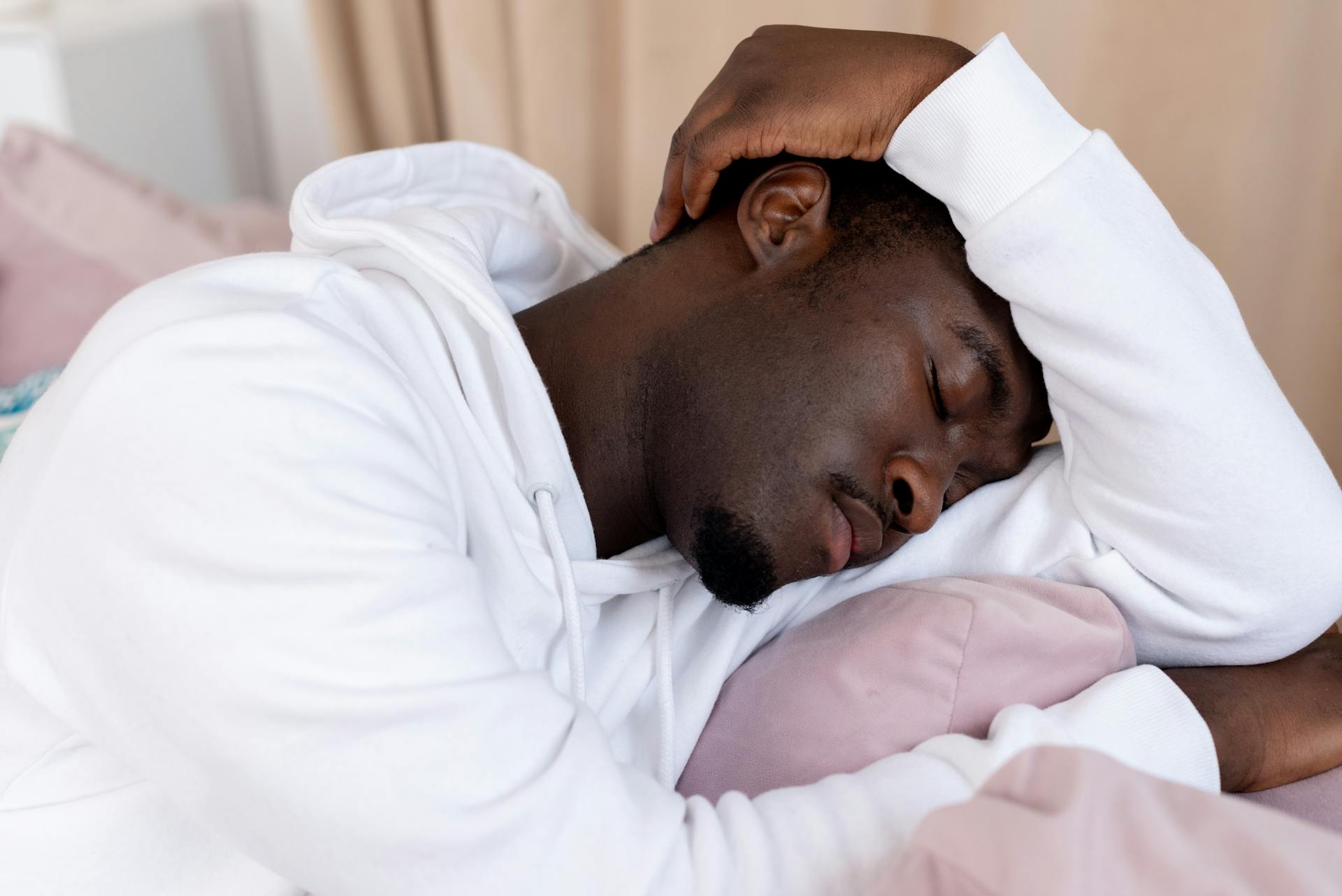
This is not about the occasional restless night where you struggle to sleep but the kind where you are exhausted at 10 PM, climb into bed and suddenly your brain decides it’s time to review every embarrassing thing you’ve said since 2003. Or maybe you fall asleep fine but wake at 3 AM like clockwork, staring at the ceiling until the alarm goes off. You have tried the melatonin supplements, ashwagandha reading a boring book, listening to the sound of rain, the meditation apps, the cut-off-caffeine-after-noon rule. Nothing works.
Here is a question you probably haven’t asked: what kind of light bulbs are in your bedroom?
I know how that sounds. Like one of those wellness articles that blames everything on your water filter or the electromagnetic field from your WIFI router. But stick with me, because this one actually matters. Unlike most health advice that requires expensive supplements or complete lifestyle overhauls, this fix takes ten minutes.
The problem starts with something called your circadian rhythm. Fancy term, simple meaning: your body runs on a twenty-four-hour clock. This clock controls when you feel hungry, when you have energy, when you get sleepy, even how well your immune system fights off colds. And this clock doesn’t run on batteries. It runs on light. Specifically, blue light.
Sunlight contains blue wavelengths. That’s why noon feels bright and sharp and awake. Sunset removes those blue wavelengths that is why the sky turns orange because the blue has scattered away. Your body reads this signal. Blue light means daytime, be alert. No blue light means nighttime, produce melatonin, go to sleep.
This system worked beautifully for thousands of years. Then we invented LED bulbs and plastered them all over our homes.
Here’s what nobody tells you about those energy-efficient bulbs you probably swapped into every lamp. An old-fashioned incandescent bulb emits about three percent blue light. A candle, which humans used for centuries, emits less than one percent. A typical “daylight” LED bulb, the kind labeled 5000K or 6500K marketed as bright and natural emits 25-30%.
Think about what that means. When you sit under that bulb at 10 PM reading or watching TV, you’re blasting your brain with ten times more circadian-disrupting light than your grandparents ever experienced at night. You’re telling your internal clock it’s noon. Then you climb into bed and wonder why you can’t fall asleep.
The sleep disruption is just the beginning. Your digestion runs on that same clock. Your pancreas produces less insulin at night because it expects you to be sleeping, not eating. When blue light keeps your body in daytime mode, your cells become less responsive to insulin. This is a direct path to weight gain and blood sugar problems.
Your brain cleans itself while you sleep, it literally flushes out waste products that accumulated during the day. Disrupt that sleep, disrupt that cleaning process. Your immune system follows the same schedule. Your mood follows the same schedule. Everything follows the same schedule, because everything in your body is connected to that master clock.
And your kids? Their eyes are more transparent to blue light than yours. They’re absorbing even more of this stuff from tablets and phones and those bright LED bulbs in their rooms. Exploding rates of nearsightedness, rising attention issues, teenagers whose natural sleep cycles are so wrecked that dragging them out of bed for school feels like cruelty, all of it connects back to light at the wrong time.
Here’s the frustrating part. We switched to LEDs for good reasons. They use less energy, last longer, better for the environment. But somewhere in that transition, nobody asked the obvious question: what happens when we flood our evenings with light that mimics high noon? Governments mandated efficiency based on lumens per watt. Manufacturers built what the regulations demanded. Consumers trusted that if something was legal and green, it must be safe. And now millions of us are walking around sleep-deprived, confused and completely unaware that the solution is sitting on a shelf at the hardware store.
The good news is that your body isn’t broken. It’s just confused. And it will re-align itself quickly once you give it the right signals.
Start with morning light. Within an hour of waking, get outside for ten to twenty minutes. Don’t wear sunglasses. Let that morning light hit your eyes. This does two things: it stops melatonin production for the day and sets a timer that will make you sleepy about fourteen hours later. If you do nothing else, do this.
Next, look at your bulbs. Go into your bedroom and living room and check the temperature rating on the bulbs. If it says 4000K, 5000K, or 6500K, those are daylight bulbs. Replace them with 2700K or lower. The lower the number, the warmer the light. Put dimmers on everything. For late evening, get some salt lamps or red bulbs. Red light has almost no effect on melatonin.
Create an evening routine that doesn’t involve screens. I know it’s hard. But try this: sixty minutes before bed, dim the lights, put the phone in another room and do something without a screen. Read a physical book. Talk to someone. Stretch. Write in a journal. The first few nights will feel strange. By the end of the first week, you’ll notice the difference.
Make your bedroom dark, blackout curtains are excellent. Electrical tape over every LED indicator light. Phone in another room or face down and covered. Even tiny amounts of light can disrupt your sleep without waking you up. If you need a night light, make it red.
Light is medicine. Like any medicine, the dose and timing matter. Blue light in the morning and afternoon is beneficial it keeps you alert and sets your clock correctly. Blue light at night works against everything your body is trying to do.
You have more control than you think. Every time you choose a warm bulb over a cool one, every time you step outside for morning light, every time you turn off your phone and sit in the amber glow of a lamp, you’re working with your biology instead of against it.
For more information, here are some studies:
Harvard Health – Blue light has a dark side:
https://www.health.harvard.edu/staying-healthy/blue-light-has-a-dark-side
2025 MDPI Life study – Blue vs red LED effects on melatonin:
https://www.mdpi.com/2075-1729/15/4/644
2018 Barcelona Institute for Global Health – Blue light at night and cancer:
https://ehp.niehs.nih.gov/doi/10.1289/EHP3897
WHO IARC – Shiftwork and cancer classification:
2026 UCL Scientific Reports study – LED lighting and mitochondrial function:
https://www.nature.com/articles/s41598-025-91720-5
2016 Journal of Clinical Endocrinology & Metabolism – Light exposure and insulin resistance:
https://academic.oup.com/jcem/article/101/1/37/2812605
2024 Frontiers in Cellular and Infection Microbiology – Blue LED and gut microbiome:
NIH – How sleep clears the brain:
https://www.nih.gov/news-events/nih-research-matters/how-sleep-clears-brain
PubMed – Children’s eyes and blue light transmission:
https://pubmed.ncbi.nlm.nih.gov/29049783
Daily Mail interview – Professor Glen Jeffery on LED health risks:
https://www.dailymail.co.uk/health/article-14409869/amp/led-lights-health-risks-asbestos.html
Sleep Foundation – Morning light and sleep:
https://www.sleepfoundation.org/circadian-rhythm/morning-light-and-sleep
2021 Sleep journal – Light exposure during sleep and health:










Very insightful article I never knew the LED lights could be messing up my sleep.
Gld you learnt something.