

For Mabooli- whose real name is withheld for security reasons—displacement has been a lifelong condition.
He was born into instability and at the age of 15, violence in Burundi pushed families across borders in search of safety. He lost contact with his family then and has never traced them. As a child, he lived in the eastern Democratic Republic of Congo before he fled again to refugee camps in Tanzania. Years later, in 2012 precisely, and believing conditions had improved, he briefly returned to Burundi. That hope proved short-lived. By 2015, renewed insecurity forced him and others to flee once more, returning to Tanzania and being received into Nyarugusu Refugee Camp.
Today, decades after his first displacement, he again faces uncertainty. Recent developments in the camp raise troubling questions about whether fundamental protections owed to refugees under international law are being respected.
The pressure to repatriate has been on for at least two years. Since 2023, Burundian refugees in Nyarugusu Camp have reportedly been encouraged by authorities and humanitarian actors to register for voluntary repatriation to Burundi. But the response from the refugees was not very enthusiastic. Mid year 2025, interviews were conducted with refugees asking three central questions: why they had fled, whether they wished to return, and—if not—why they preferred to remain in Tanzania.
However, refugees indicate that the results of these interviews were never publicly communicated, leaving uncertainty about how the information was used in policy decisions affecting them.
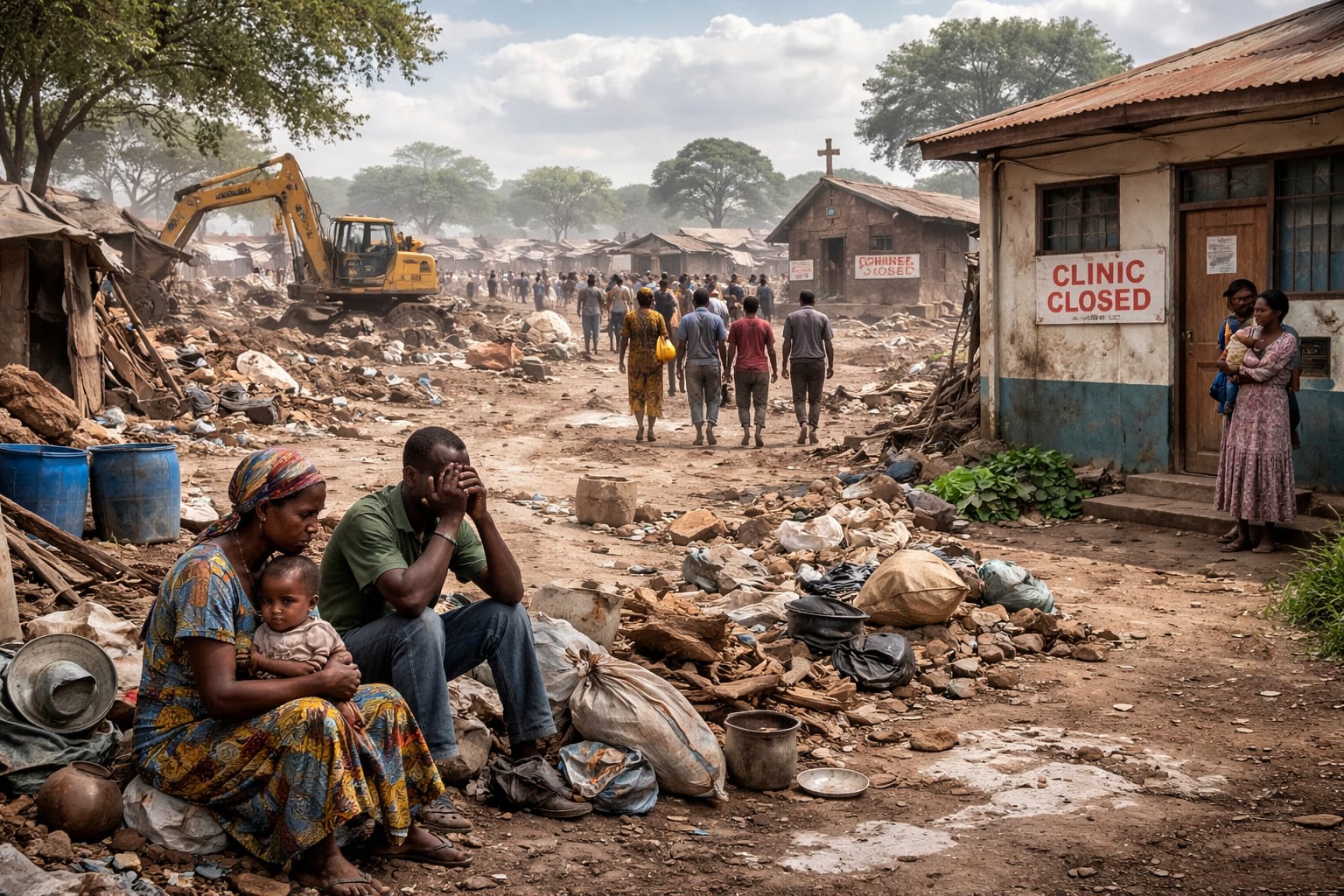
By late December 2025, a more troubling development began. Demolitions of refugee shelters and basic household structures—including kitchens, toilets, and homes—started in the Burundian section of the camp. Schools and hospitals in the same section were also closed. The Burundian section of the camp borders the DRC section of the camp.
The demolitions have continued for weeks well into March 2026. Refugees say the destruction of homes, combined with reductions in food rations and the closure of social services, has created immense pressure to register for repatriation. The registration is meant to make the repatriation come across as voluntary.
At first, the buses provided were transporting approximately 300 returnees per day for two days each week. The number later rose to several thousand per week. The ferrying process was suspended in the second week of March 2026 presumably to resume in the first week of April 2026. Yet many refugees whose homes have already been demolished remain in the camp, exposed to rain, cold, and deteriorating living conditions.
The critical question now confronting observers is whether such repatriation can truly be described as voluntary.
International refugee law is anchored in one fundamental principle of non-refoulement.
This rule, enshrined in the 1951 Refugee Convention and widely accepted as customary international law, prohibits states from returning refugees to territories where their lives or freedom may be threatened.
The principle does not only prohibit direct forced deportations. It also forbids indirect coercion—situations in which refugees are pressured to return because living conditions have been intentionally degraded.
If essential services such as housing, health care, sanitation, food assistance, and education are removed in a way that compels refugees to leave, international law may view such actions as constructive refoulement.
For many long-term refugees in Nyarugusu, the stakes are especially high. Some have lived outside Burundi for decades. Others were born in exile in countries such as Rwanda or the Democratic Republic of Congo before eventually settling in Tanzania.
Many have no remaining land, family connections, or support structures in Burundi. The family land they once could have had is easily taken over remaining relatives or purchased by bonafide purchasers for value without notice.
Without these ties, their return could lead not to reintegration but to internal displacement and renewed vulnerability. Such a solution fails on the durability measure.
Some refugees claim to be members of the now suspended Movement of Solidarity for Democracy. If this is cases, they qualify as protected persons with entitlement to seek asylum in the second country or a third.
Others had already started the process of resettlement in a third country. Among these, are those whose third country of acceptance is the United States. The fast changing migration policy in the United States must have left the United Nations High Commission for Refugees and International Organisation for Migration with limited options on how to handle these cases. But their houses too were demolished.
There are also reports of harassment after return coming from refugees who have already returned to Burundi.
According to accounts circulating among camp residents, some returnees have encountered harassment shortly after crossing the border. In one incident, a convoy of returnees traveling through the Ruhigyi area of Burundi was stopped by a provincial military commander. Identification documents issued at the reception center were confiscated and, according to reports, have not been returned.
Other returnees have allegedly faced pressure from local youth groups demanding that they join the ruling political party. Those who refuse are said to be subjected to harassment and fines that quickly deplete the modest financial assistance provided at reception centers.
Such reports have had an immediate effect inside the camp. Some refugees who had already returned to Burundi are reportedly attempting to cross back into Tanzania. Others registering for repatriation are choosing destinations near the Tanzanian border, hoping they could return quickly if conditions deteriorate.
Memories of earlier repatriation cycles—particularly those surrounding the closure of Mtabila camp in 2012—remain vivid among refugees, many of whom fear that a similar pattern may repeat itself around Burundi’s future electoral cycles. The left Mtabila in similar circumstances in 2012 but had to return in 2015 due to election-related instability. The next election is scheduled for 2027 and the Burundian refugees are concerned that there could be a repeat of the conditions that made them flee earlier.
The current situation has also raised serious human rights concerns. The following rights are under strain:
The right to housing as thousands of refugees whose homes have been demolished are living without adequate shelter.
Deficiency in sanitation as toilets were among the first structures targeted in the demolitions, increasing the risk of sanitation-related diseases.
The right to Health care since hospitals serving the Burundian section of the camp have been closed. Remaining facilities are located in the DRC section of the camp and face severe shortages of staff and medicines.
The right to adequate food given that food rations have reportedly been reduced. The rains passed unutilised for agricultural purposes because many had been pressured to register for departure. Some families say mothers have resorted to consuming food intended for infants.
The right to Education is impacted by school closures. Many Burundian children will miss or have missed the current school term.
Freedom of worship is impacted since churches serving refugee communities have also been closed in affected areas.
Taken together, these developments create conditions that humanitarian experts often describe as “push factors”—pressures that make remaining in the camp increasingly untenable.
Protecting refugees while seeking durable solutions is the most desirable position. Repatriation can be a legitimate and even desirable solution for refugees—but only when it is genuinely voluntary, safe, and dignified.
International best practice requires that refugees make an informed decision to return without coercion and with full knowledge of the conditions awaiting them.
In situations like that prevailing in Nyarugusu, several steps could help ensure compliance with international protection standards:
Halt demolitions of homes until the day refugees actually depart.
Allow departing refugees to dismantle their own homes voluntarily when boarding transportation.
Prioritize assistance for vulnerable groups, including the elderly, persons with disabilities, women, and children.
Maintain essential services—health care, sanitation, education, and food—throughout the repatriation process.
Distinguish clearly between refugees who wish to return and those who continue to require protection.
Provide guidance for refugees who are already in the process of resettlement in third countries.
Most importantly, authorities and humanitarian agencies must ensure that no refugee is compelled—directly or indirectly—to return to danger.
Conclusively, for refugees like Mabooli, displacement has already defined a lifetime.
After more than three decades moving between conflict zones and refugee camps, the promise of international refugee protection remains his last safeguard.
The situation unfolding in Nyarugusu Camp is therefore not merely a logistical challenge—it is a test of whether the international community will uphold the core principle that has protected millions of displaced people since the end of the Second World War.
The principle is simple but profound. No refugee should be forced back into danger. Plus in the context of the East African Community, its common market and customs union, one wonders why it should be so difficult to integrate refugees from one country into another.
The silence of Civil society organisations is loud. Especially those with audience at the African Commission on Human and People’s rights, the African Court of Justice and the East African Court of Justice.